Saying no politely means giving a clear answer, a brief reason if you want to, and no false promise. Want to check your own wording? Use the tone checker.
Why saying no feels hard
Each line can go straight into the tone checker. A no can feel like a confrontation even when it’s reasonable, which is why vague answers and over-explaining are common — a short, clear line usually lands better than a long one.
| Instead of | Try | |
|---|---|---|
| “Maybe, I’ll see…” | “I won’t be able to this time.” | |
| “I guess if I have to…” | “That’s not something I can take on right now.” | |
| Long apology before the no | “Thanks for thinking of me — I’ll have to pass.” |
Polite ways to say no by situation
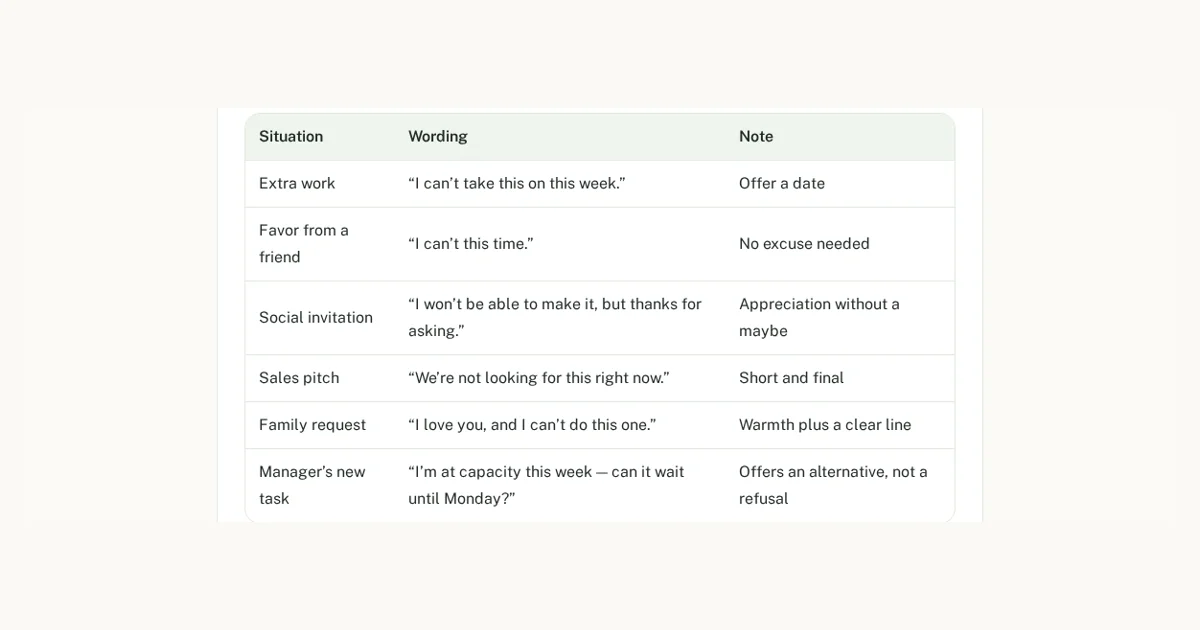
Table rows are listed below.
| Situation | Wording | Note |
|---|---|---|
| Extra work | “I can’t take this on this week.” | Offer a date |
| Favor from a friend | “I can’t this time.” | No excuse needed |
| Social invitation | “I won’t be able to make it, but thanks for asking.” | Appreciation without a maybe |
| Sales pitch | “We’re not looking for this right now.” | Short and final |
| Family request | “I love you, and I can’t do this one.” | Warmth plus a clear line |
| Manager’s new task | “I’m at capacity this week — can it wait until Monday?” | Offers an alternative, not a refusal |
Each wording line can be pasted into the checker above to see how it reads before sending.
Holding a no after pushback
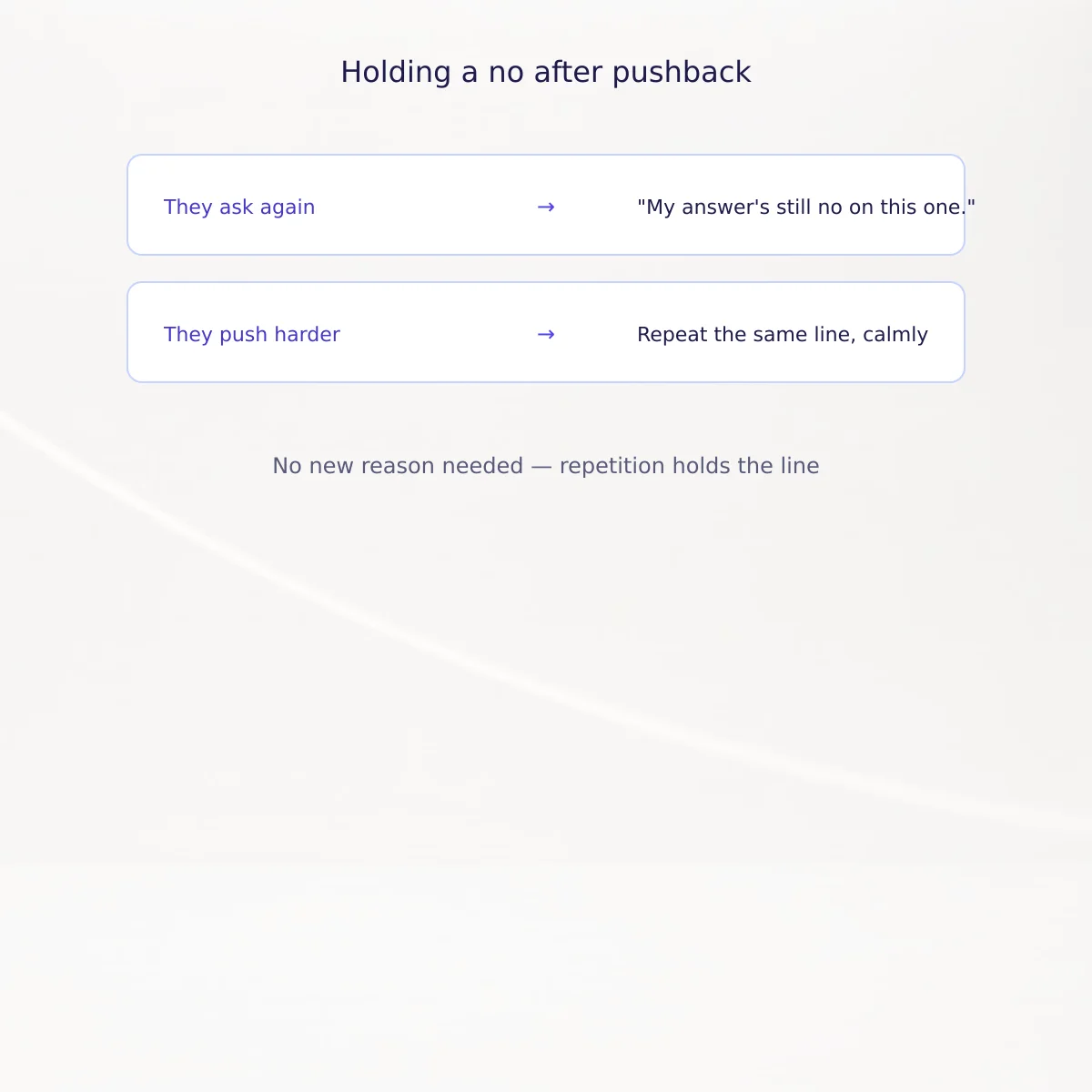
Use the wording as a starting point. When a no gets pushed back on, repeating the same line tends to work better than finding a new reason.
| They say | Reply |
|---|---|
| “Are you sure? Just this once.” | “I am, thanks for understanding.” |
| “You always say no.” | “My answer’s still no on this one.” |
| “It would really help me out.” | “I hear that, and I still can’t.” |
Advice here is general; adjust the wording to the person and the situation.
Was this page helpful?
One tap tells us which guides need more detail.
Thanks for your feedback!