Tone Checker
A tone checker reads a draft message and flags wording that can sound harsh, so you can rephrase before you send it. Text stays in your browser. New here? Read about Respect Coalition.
Check a message
Check the tone of a message
Paste a draft and read the highlights. It looks for patterns that often make a message land badly: absolutes, blame, sarcasm, shouting and name-calling. It is a second pair of eyes, not a judge.
Swap harsh wording for calmer wording
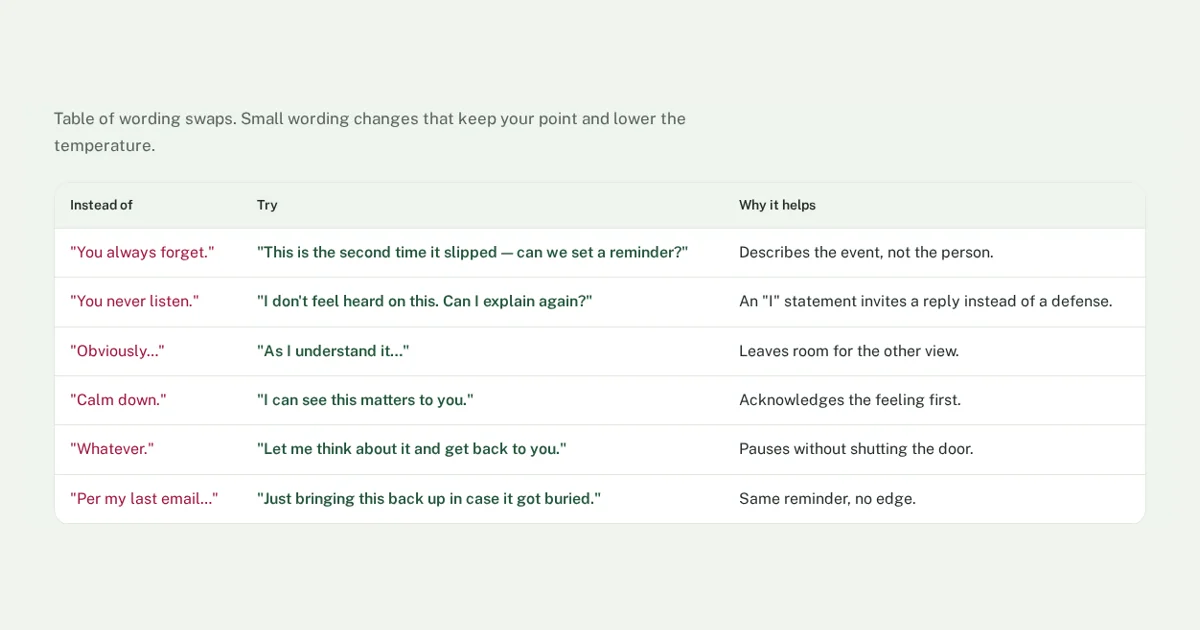
Table of wording swaps. Small wording changes that keep your point and lower the temperature.
| Instead of | Try | Why it helps |
|---|---|---|
| "You always forget." | "This is the second time it slipped — can we set a reminder?" | Describes the event, not the person. |
| "You never listen." | "I don't feel heard on this. Can I explain again?" | An "I" statement invites a reply instead of a defense. |
| "Obviously…" | "As I understand it…" | Leaves room for the other view. |
| "Calm down." | "I can see this matters to you." | Acknowledges the feeling first. |
| "Whatever." | "Let me think about it and get back to you." | Pauses without shutting the door. |
| "Per my last email…" | "Just bringing this back up in case it got buried." | Same reminder, no edge. |
Guides for hard conversations
Start with the situation you are in. A message that reads as an attack triggers a defense, and the actual request gets lost — the guides below work through specific situations in more depth than the general swaps above.
Separate the person from the problem
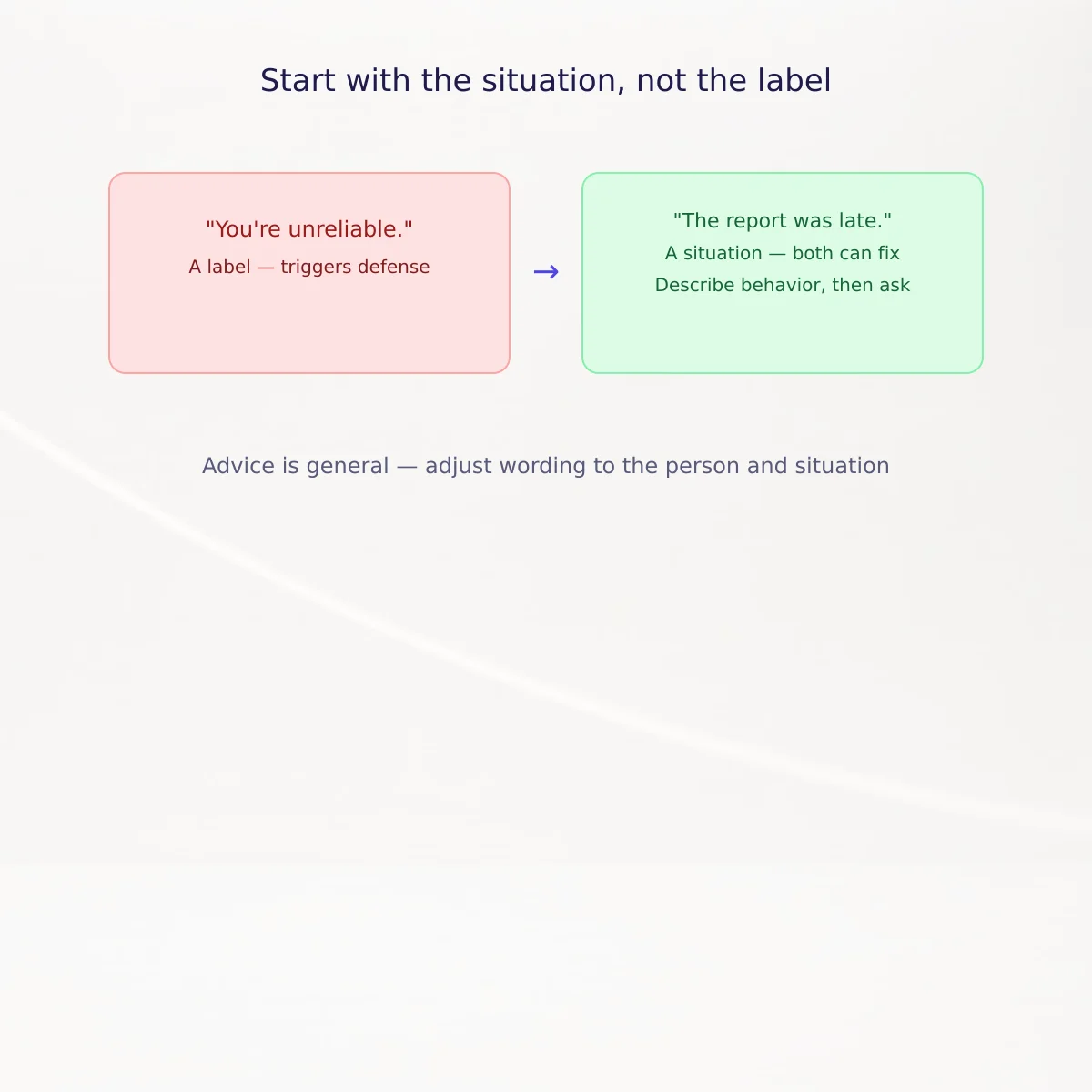
"The report was late" is something both of you can fix. "You're unreliable" is a label nobody wants to accept. Describe behavior and impact, then ask for what you need.
Watch the absolutes
Words like always, never and everyone are rarely literally true, so the reader argues with the exaggeration instead of the issue.
Give it a minute
If you feel your heart rate going up while typing, save the draft and come back later. Most messages are better for a short pause. Advice here is general; adjust the wording to the person and the situation.
Was this tool helpful?
One tap tells us which guides need more detail.
Thanks for your feedback!